
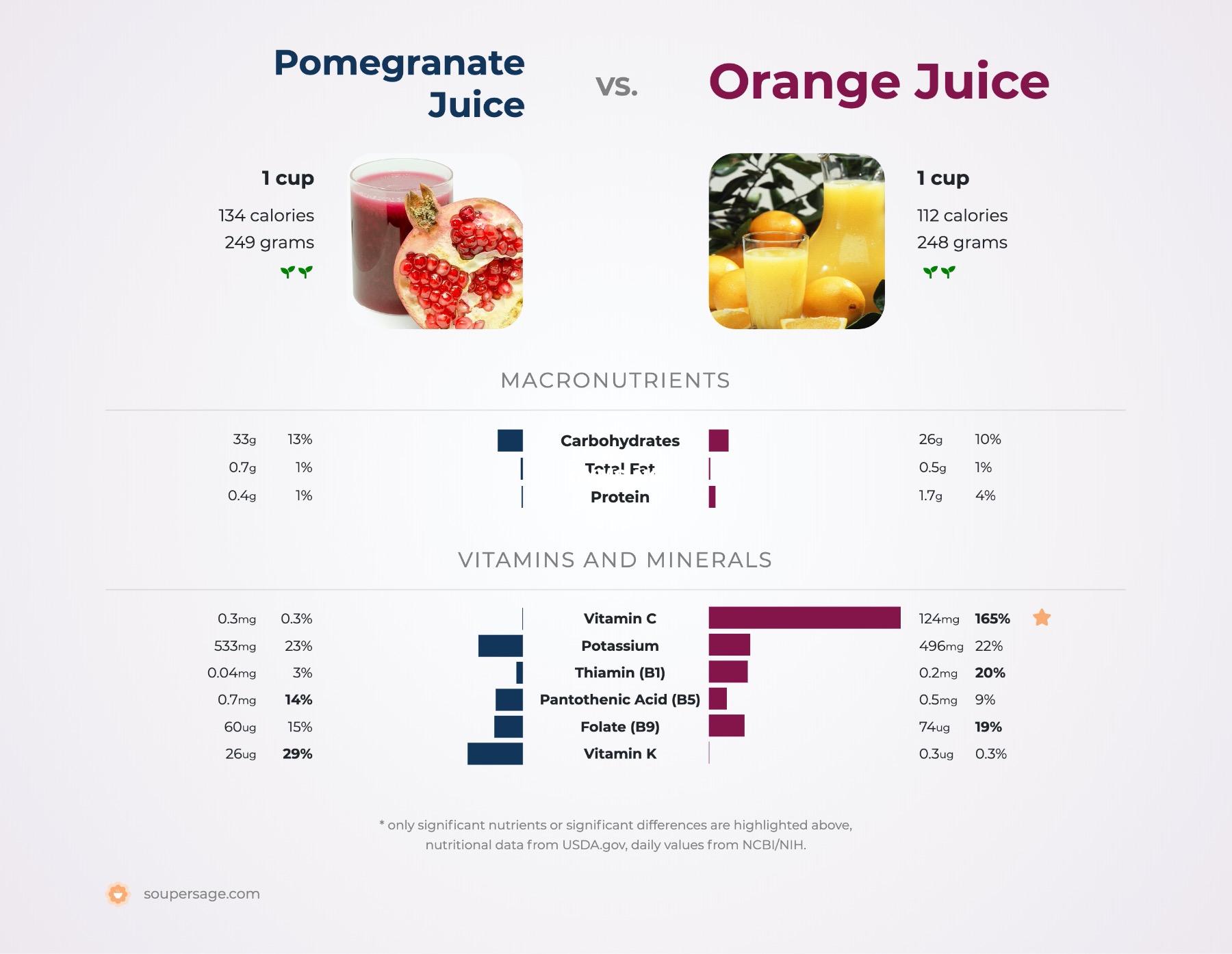

Vitamin C is an essential nutrient that plays a role in many important bodily functions, including immune system function, wound healing, and the production of collagen. Both vitamin C tablets and fruit juices are good sources of vitamin C, but they have different nutritional profiles.
Vitamin C Tablets
Pros:
Convenient and easy to take
Can be taken in high doses
Relatively inexpensive
Cons:
May not contain other nutrients found in fruit juices
May cause stomach upset in some people
Fruit Juices
Pros:
Naturally occurring source of vitamin C
May also contain other nutrients, such as fiber, potassium, and antioxidants
May taste better than vitamin C tablets
Cons:
Can be high in sugar
May not be as concentrated as vitamin C tablets
Which is Better?
The best way to get vitamin C is through a combination of whole fruits and vegetables, vitamin C tablets, and/or fruit juices. However, if you are only able to choose one, the better option depends on your individual needs and preferences.
If you are looking for a convenient and easy way to get a high dose of vitamin C, then vitamin C tablets may be a good option for you. However, if you are concerned about sugar intake or want to get other nutrients along with vitamin C, then fruit juices may be a better choice.
Ultimately, the best way to decide which is best for you is to talk to your doctor or a registered dietitian. They can help you assess your individual needs and make a recommendation that is right for you.
Here are some additional things to consider when choosing between vitamin C tablets and fruit juices:
Your health goals: If you are trying to lose weight or manage diabetes, then fruit juices may not be the best choice for you because they are high in sugar.
Your taste preferences: If you don’t like the taste of fruit juices, then vitamin C tablets may be a better option for you.
Your budget: Vitamin C tablets are typically more affordable than fruit juices.
more
A team of pharmacists from the University of Santiago de Compostela (USC) has established that the levels of vitamin C in many fruit juices and soft drinks are far higher than those indicated on their labels by the manufacturers. This finding has been possible owing to a new technique developed by the researchers to determine the content of vitamin C in these kinds of drinks.
Ascorbic acid or vitamin C is a natural antioxidant in fruits and vegetables, but the European Commission permits its use as an additive in juices, jams, dairy products and other foods. The involvement of this substance in the immune response and other biochemical processes such as the formation of collagen and the absorption of iron is well-known. However, high levels of ascorbic acid can cause diarrhoea and gastrointestinal problems, as a result of which scientists are attempting to determine the content of vitamin C in foods with greater and greater accuracy.
Now, a group of researchers from the Faculty of Pharmacy of the USC has developed a new chromatographic technique (these are used to separate and identify chemical elements) aimed at accurately measuring the ascorbic acid in fruit juices and soft drinks. By applying this method, they have found that the amounts of vitamin C stipulated on the labels of many drinks are not real. In a sample of 17 fruit juices, soft drinks and isotonic drinks, only two correspond to what is indicated on the bottle.
Ana Rodríguez Bernaldo de Quirós is a member of the team which has developed the new technique, whose details have recently been published in the magazine Food Chemistry. “The other drinks contain much higher levels than those specified by the manufacturer because, as has already been indicated in a previous study, the label probably only shows the amount of added ascorbic acid, without taking into account the fruit’s natural vitamin C content,” she explained.
Bernaldo de Quirós highlights the greater resolution and sensitivity of the method, by means of which it is possible to detect up to 0.01 milligrams of vitamin C per litre, “thanks to the use of new column chromatography, based on spherical particles of ultra pure silica 3 microns in size.”
“Another advantage of the method is its simplicity and speed, as the total time taken to carry out the analyses is no more than six minutes,” the researcher remarked.
With the new technique, the valuation of the ascorbic acid in the drinks has revealed some curious data. Of the 17 samples analyzed, the one with the highest vitamin C content was an apple juice (840 mg/l), more than the orange juices (352-739 mg/l). The results for the pineapple and grape juices were 702 mg/l and between 30.2 and 261 mg/l for the soft drinks (orange, lemon and apple).
The researchers also evaluated how the vitamin C content of the orange juices and tea drinks varies while they are on the shelves in the temperature conditions specified by the manufacturer. After six days, the former barely lose 8% of their ascorbic acid while, in the tea drinks, this substance falls by 54% at 4ºC and practically disappears at room temperature.
I hope this helps!
<p>The post Comparing the Nutritional Value of Vitamin C Tablets and Fruit Juices … www.drs.ng first appeared on SwordPress.</p>